Compare
JackHamr vs Factory
Factory is one of the most complete coding-agent platforms around: Droid in your terminal, IDE and desktop, Missions for big multi-feature projects, and serious enterprise controls. JackHamr is your AI dev team: named specialist agents, each with its own large cloud machine, working through approval-gated workflows on your code and on the jobs around it. Here is an honest look at where each one is stronger.
Updated October 12, 2026. Factory details from Factory's published pricing and documentation.
At a glance
What it is
JackHamr
Your AI dev team. Named specialist agents run the full delivery pipeline, each on a cloud machine the platform hosts.
Factory
An agent-native software development platform: the Droid agent in a desktop app, CLI, SDK and IDEs, plus automations for code review, QA, triage and incidents.
Who it is for
JackHamr
Teams with real codebases and real jobs to hand off: engineering, research, marketing, and ops.
Factory
Developers and engineering organizations, up to enterprises that need SSO, audit logs, and on-premise or airgapped deployment.
Where the work runs
JackHamr
A persistent cloud machine per agent: up to 16 cores, 64 GB RAM, Docker. You can open its VS Code, terminal, or browser any time.
Factory
On your own machine through the CLI or desktop app, or on Droid Computers: persistent Factory-hosted machines (4 CPU, 8 GB RAM when created from the app) that pause when idle.
Your existing code
JackHamr
Works on your GitHub repos on branches, with SSH key and token fallbacks when an org blocks OAuth apps, and opens pull requests.
Factory
Works in your local repo and worktrees, and connects to GitHub and GitLab, including self-hosted GitHub Enterprise Server and GitLab.
Many agents at once
JackHamr
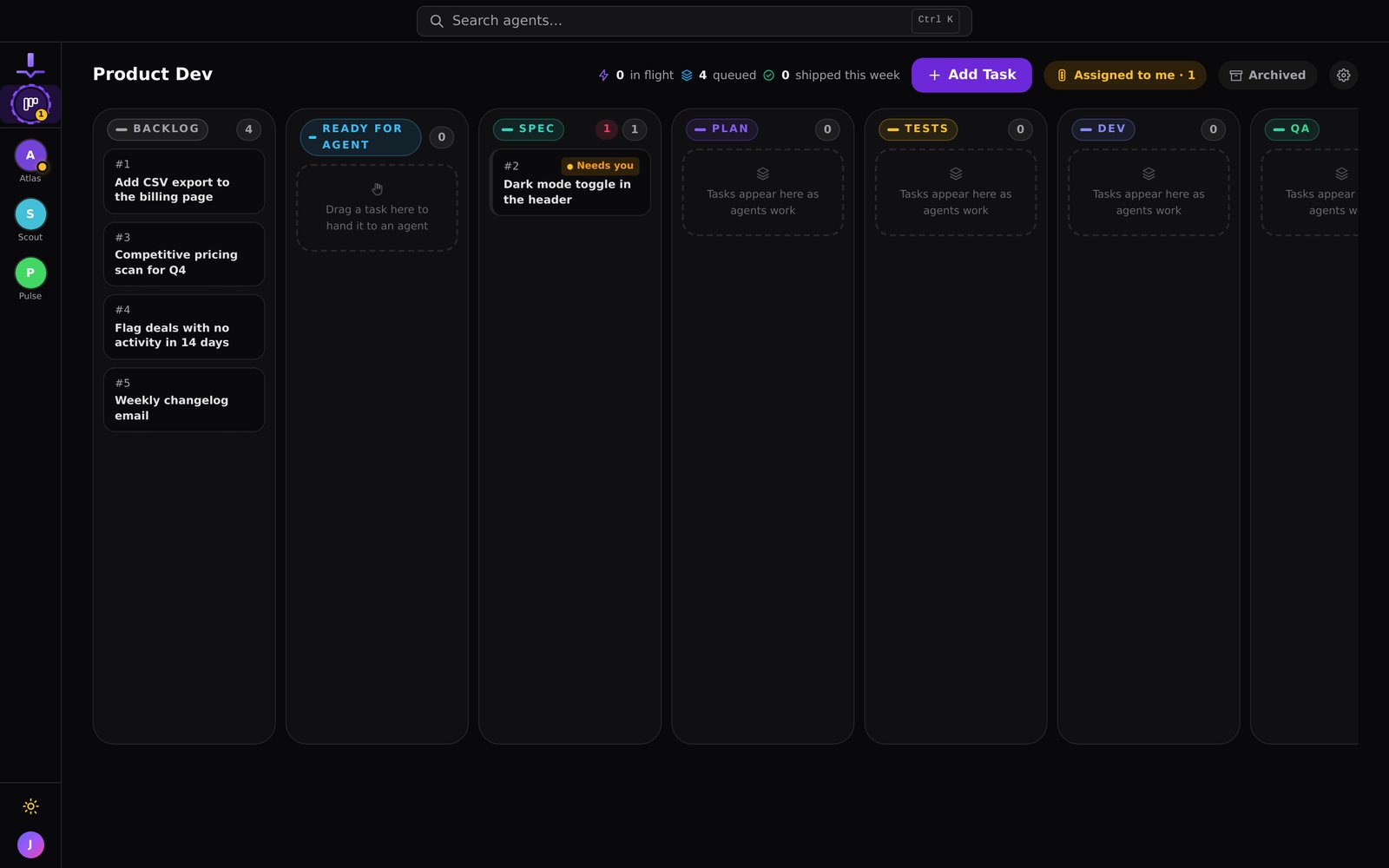
Boards fan tasks out to as many agents or clones as you like, in queue, clone, or distribute mode.
Factory
Background agents in parallel, and Missions: an orchestrator that plans features and milestones and coordinates workers across them.
Process and approvals
JackHamr
Workflows with stages (spec, plan, build, QA, code review, product review) and approval gates that queue decisions for you.
Factory
Spec mode and Mission plans you approve, plus autonomy levels and permission rules for what runs without asking.
Beyond code
JackHamr
Agents can own a job in research, marketing, or ops: plan their own work, check in on a schedule, and ask before anything you flagged.
Factory
Focused on the software lifecycle: coding, review, security review, QA, triage, incident response, and repository wikis.
Where you hand off work
JackHamr
The web app, desktop and phone apps, Slack, and ChatGPT, Claude or Cursor over MCP.
Factory
The desktop app, CLI and IDEs, plus delegations from Slack, Linear, Jira, and Microsoft Teams.
Models
JackHamr
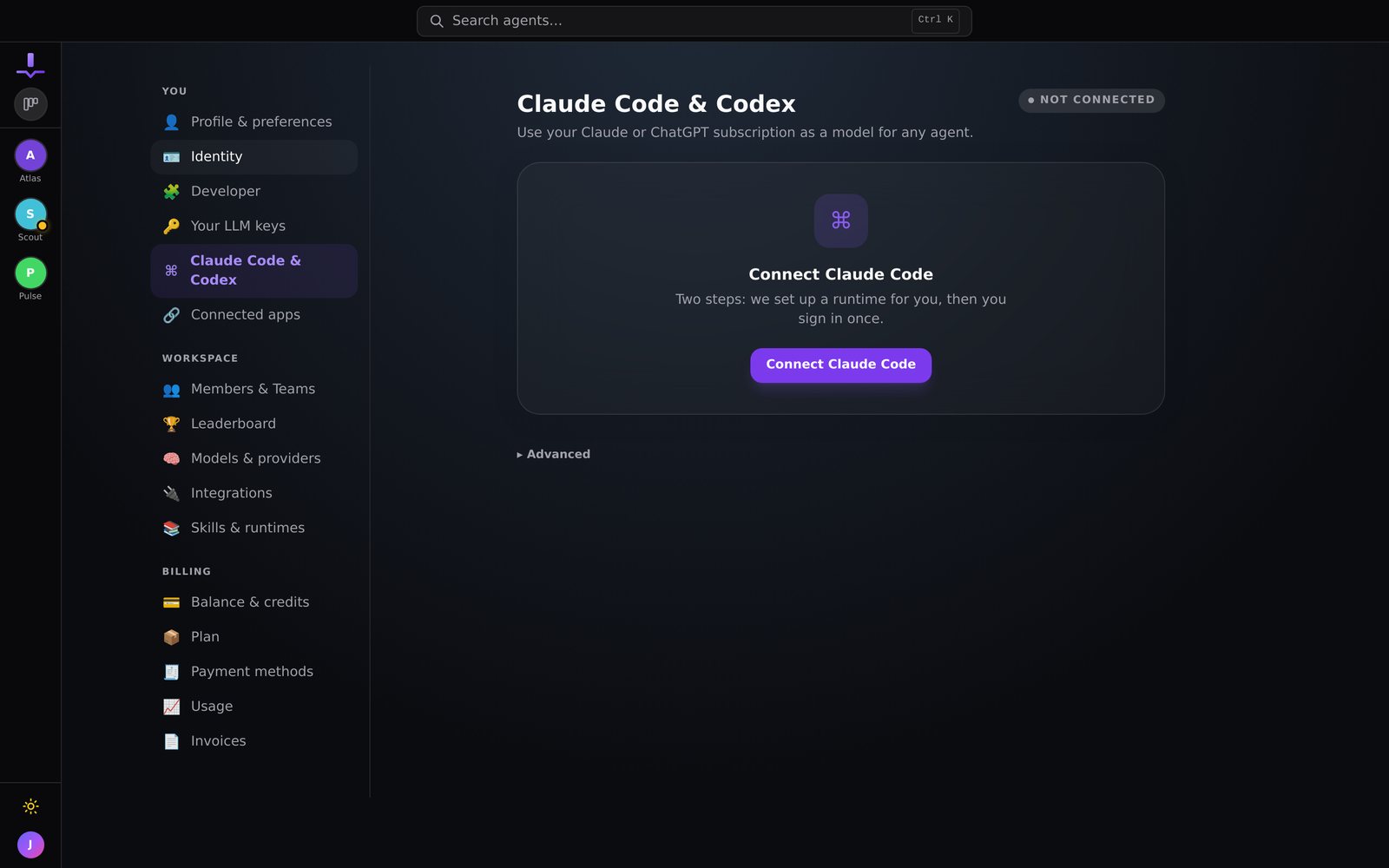
Any model: ours, your own OpenAI or Anthropic keys, or your Claude Code or Codex subscription as the brain.
Factory
Factory-managed models with an automatic router and a free open-weight pool (Droid Core), plus your own keys in the CLI and desktop app.
Pricing model
JackHamr
Pay only while agents run: infrastructure at cost with an itemized bill, tokens at provider rates. Free to start, no seats.
Factory
Pro $20, Plus $100 and Max $200 a month with rolling 5-hour, 7-day and 30-day limits; Teams $60 a month plus $40 a seat; prepaid extra usage.
Where JackHamr is stronger
Factory puts a very capable agent wherever engineers already work. JackHamr gives you a standing team that works on its own machines, takes work from a board, and stops for your decisions.
- A team, not a session. Named specialist agents (spec, build, QA, review) each keep their own machine, memory and role, and you can run as many as you need from a board.
- Bigger machines that stay. Each agent gets up to 16 cores and 64 GB RAM with Docker, and keeps its files, databases and running apps between tasks.
- A process with gates. Spec, plan, build, QA and review run as separate agents, and approval gates queue the calls that need you.
- More than engineering. Agents can own a job in research, marketing or ops, plan their own work, and ask before anything you flagged.
- Pay for what runs. Infrastructure at cost and tokens at provider rates, with no seats and no rolling usage windows.
- Hand off from anywhere. ChatGPT, Claude or Cursor over MCP, Slack, or your phone, and bring a Claude Code or Codex subscription as an agent's brain.
Where Factory is stronger
Being fair about this matters, so here is when we would point you to Factory on its own.
- You want the agent in your own terminal and IDE, working on your local machine.
- You need enterprise controls: SSO and SCIM, zero data retention, audit logs, data residency, or an on-premise or airgapped deployment.
- Your issues live in Linear or Jira, or your code is on GitLab or a self-hosted GitHub. JackHamr works with GitHub only today.
- You want ready-made automations for pull request review, security review, QA, triage and incident response.
- You are planning a large multi-feature project and your repository already has automated, scriptable QA for Missions to validate against.
Or use both
They fit together well. Keep Droid in your terminal for hands-on coding. Hand the longer jobs to a JackHamr team: features that should go through spec, build, QA and review with your approval in between, work spread across many agents from a board, and the recurring research, marketing and ops work around the code.
You can read how agents run the pipeline in The guided build workflow, and how parallel work is dispatched in Boards: a Kanban board your agents run.
Questions people ask
Is JackHamr a Factory alternative?
For teams that want a standing team of agents rather than a coding agent per session, yes. Factory is built around the Droid agent in your terminal, IDE and desktop, with strong enterprise controls. JackHamr gives you named specialist agents, each on its own large cloud machine, working from boards through approval-gated workflows, and agents that can own jobs outside engineering too.
Does JackHamr run in my terminal like Droid?
No. JackHamr agents work on their own cloud machines, and you reach them from the web, desktop and phone apps, Slack, or an MCP client such as Claude, ChatGPT or Cursor. You can open an agent's VS Code or terminal any time, but the work does not run on your laptop. If you want the agent inside your local terminal, Factory's CLI is the closer fit.
Can I use both?
Yes. Keep Droid in your editor for hands-on work, and give longer jobs to a JackHamr team: a feature that should go through spec, build, QA and review with your approval in between, or recurring work like reports and marketing that should keep running without you.
When is Factory the better choice?
If you need SSO and SCIM, zero data retention, audit logs, data residency, or an on-premise or airgapped deployment; if your issues live in Linear or Jira; or if your code is on GitLab or a self-hosted GitHub. Factory is also the more natural fit for large multi-feature Missions when your repository already has automated, scriptable QA.