Compare
JackHamr vs OpenAI Dots
OpenAI Dots are always-on AI agents inside ChatGPT: each one gets its own cloud computer, connects to your apps, and helps with whatever is on your plate. JackHamr agents are built around a different idea. You give an agent a job and goals, and it works toward them on its own, asking only when something needs your call. Here is an honest look at where each one is stronger.
Updated September 29, 2026. Dots details from OpenAI's DevDay 2026 announcements as reported by CNBC and Wired.
At a glance
What it is
JackHamr
An AI agent platform where autonomous agents own a job, each on its own cloud machine, alongside boards and workflows for team work.
OpenAI Dots
Always-on personal AI agents inside ChatGPT, powered by OpenAI's GPT-6 Astra model.
How it works on its own
JackHamr
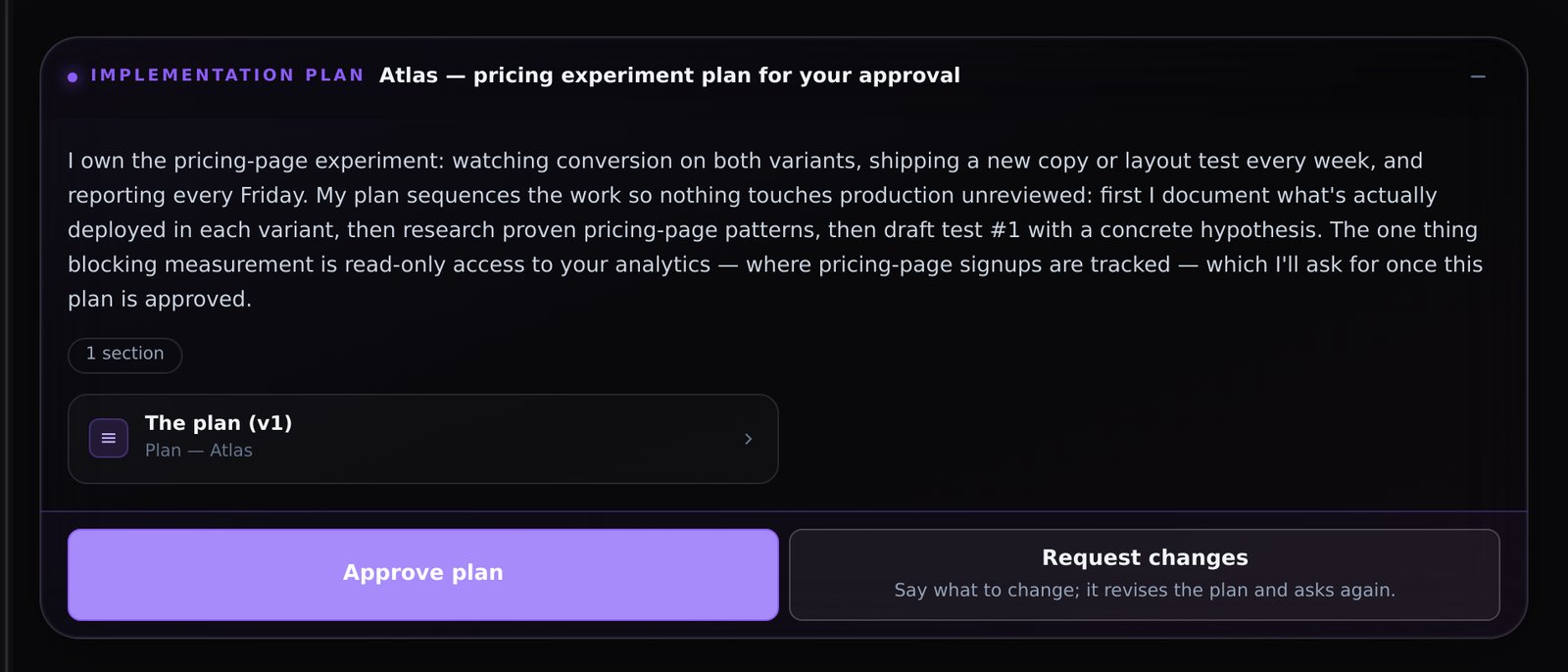
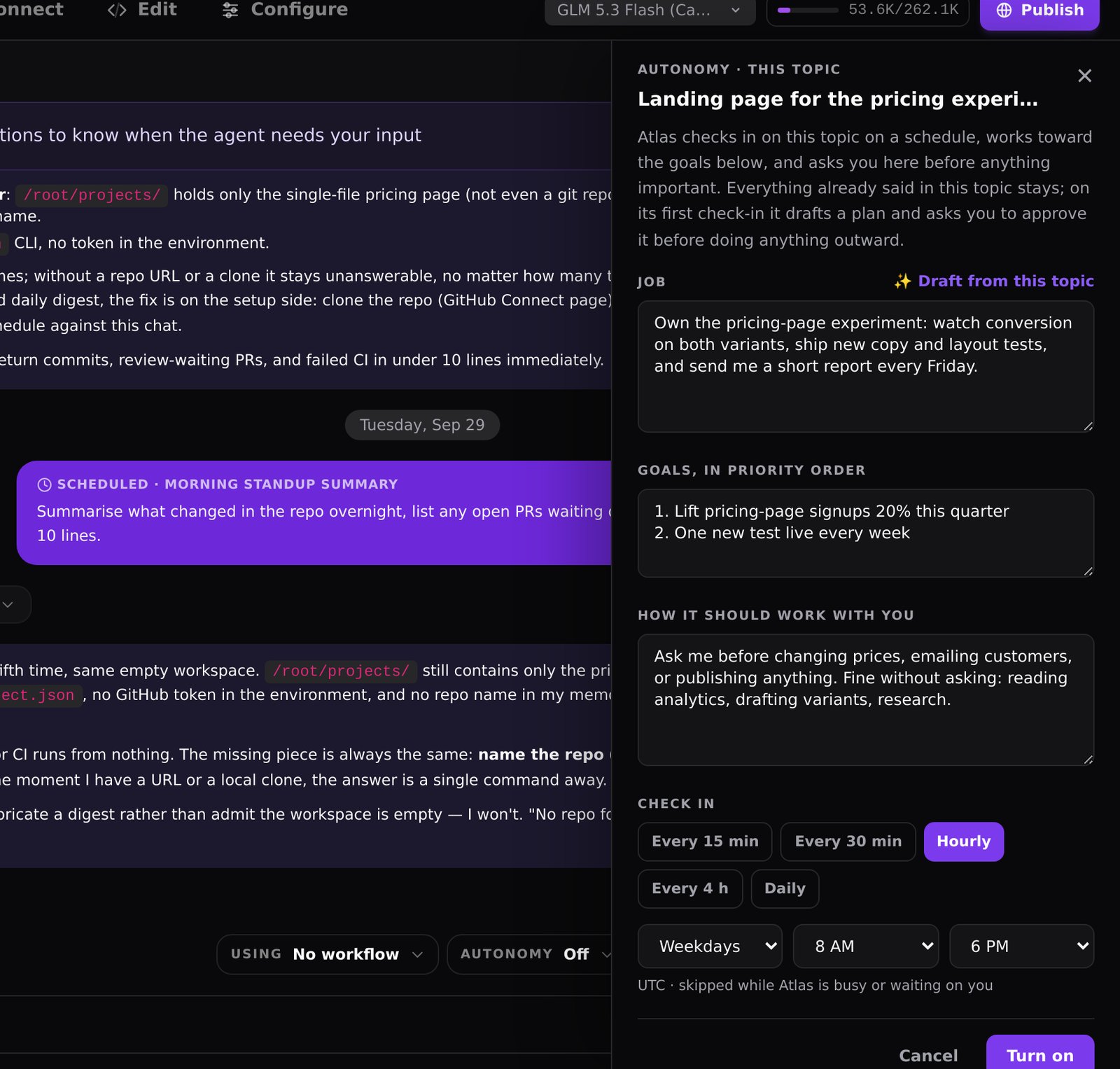
You set a job and goals in plain English. It drafts a plan you sign off, then checks in on its own schedule, picks the most valuable next step, and adjusts as results come in.
OpenAI Dots
Always on: it pulls context from your connected apps and calendar and proactively offers help, like dinner options when you are working late.
How many agents
JackHamr
As many autonomous agents and topics as you want today, plus boards and clones for parallel work.
OpenAI Dots
One Dot to start; OpenAI says multiple Dots working together will come later.
Approvals
JackHamr
Your own rules in plain English per topic. Decisions arrive as cards, check-ins pause until you answer, and it only stops asking when you say so.
OpenAI Dots
Explicit approval before sensitive actions like installing software or changing a password, plus Custom Rules for boundaries.
Where the work runs
JackHamr
A persistent cloud machine per agent: up to 16 cores, 64 GB RAM, with VS Code, a terminal, and a live browser you can take over.
OpenAI Dots
Its own cloud computer, managed inside ChatGPT.
Models
JackHamr
Any model: ours, your own OpenAI or Anthropic keys, or your Claude Code or Codex subscription as the brain.
OpenAI Dots
OpenAI models only.
Where you talk to it
JackHamr
Web, desktop app, mobile, and Slack.
OpenAI Dots
ChatGPT, Slack, and Microsoft Teams, with iMessage and RCS texting on a waitlist.
Connected apps
JackHamr
1,500+ apps, granted per agent.
OpenAI Dots
4,000+ apps.
Pricing
JackHamr
Pay only while agents run: infrastructure at cost, tokens at provider rates, itemized. Free to start.
OpenAI Dots
Included with ChatGPT Pro ($100 a month at launch) and Business Premium, with wider rollout planned.
Where JackHamr is stronger
A Dot helps with your day. A JackHamr agent owns a job: grow leads, keep the funnel healthy, ship the backlog. It plans, runs on its own schedule, and comes back only for the calls you asked to make.
- A job, not a to-do list. Give an agent goals like growing leads 20% a month and it decides what to do next, watches what works, and shifts its time accordingly.
- Plan before action. The agent drafts a plan and nothing happens until you sign it off.
- A team today. Run several autonomous agents in parallel, each with its own job, instead of starting with one assistant.
- Your model, your bill. Not tied to one lab, and no monthly subscription needed to try it.
- Work you can inspect. The plan is an artifact you can open any time, and every agent has a machine you can look inside.
Where OpenAI Dots is stronger
Being fair about this matters, so here is when we would point you to OpenAI Dots on its own.
- You live in ChatGPT and want an assistant there with zero setup.
- You want help with personal tasks like calendars, errands, and food orders.
- You want texting via iMessage or RCS, or more than 1,500 connected apps.
- You already pay for ChatGPT Pro and want to use what is included.
Or use both
Plenty of people will keep a Dot for their day and give JackHamr the jobs that need to run on their own: marketing, the product backlog, research, ops. One is a personal assistant; the other is a team member with a goal.
You can read how autonomous agents work in Autonomous agents: give it a job, not a prompt, and how parallel work is dispatched in Boards: a Kanban board your agents run.
Questions people ask
Is JackHamr an OpenAI Dots alternative?
For work that needs an owner, yes. Dots are always-on personal assistants inside ChatGPT. JackHamr agents are given a job and goals, draft a plan you approve, and then work toward those goals on their own schedule, asking only when something needs your call.
What are OpenAI Dots?
Dots are always-on AI agents OpenAI announced at DevDay on September 29, 2026. Each gets its own cloud computer, connects to your apps, and learns your preferences over time. They launched on ChatGPT Pro and Business Premium, starting with one Dot per user.
Can I use JackHamr with OpenAI models?
Yes. JackHamr agents can run on OpenAI models with your own API key or your Codex subscription, or on Anthropic and other models. You pick per agent.
When are Dots the better choice?
If you want a personal assistant inside ChatGPT for your calendar, errands, and messages, with nothing to set up, Dots fit well. They are not built around giving an agent a job with goals and a signed-off plan.
Give an agent a job, not a prompt.
Free to start. Nothing to install. Running in two minutes.