Compare
JackHamr vs Claude Code
Claude Code is a great coding agent, and as of this month it runs agents in parallel in the cloud. JackHamr is built for a different job: a whole team of agents, each on its own machine, that your whole company can direct. Here is an honest look at where each one is stronger, and why a lot of people use both.
Updated September 28, 2026. Claude Code details from Anthropic's documentation.
At a glance
Running many agents at once
JackHamr
Yes. Every agent gets its own cloud machine; boards fan tasks out to as many agents or clones as you want.
Claude Code
Yes. Cloud sessions run in parallel, and Projects (public beta, Pro and Max) coordinate threads for you.
Where the work runs
JackHamr
A persistent machine per agent, up to 16 cores and 64 GB RAM. It keeps its files, tools, and running apps between tasks.
Claude Code
Your own machine, or Anthropic-managed cloud VMs that are reclaimed after a period of inactivity.
What you can open on the machine
JackHamr
VS Code, a terminal and SSH, a live browser you can take over, Docker, and one-click publishing to your own domain.
Claude Code
Diffs and pull requests in the browser; teleport a cloud session into your terminal to keep going locally.
Teams
JackHamr
Organizations, roles, shared agents, shared boards, and shared workflows, available now.
Claude Code
Cloud sessions can be shared with your team. Projects are not yet available on Team or Enterprise plans and cannot be shared.
Process and approvals
JackHamr
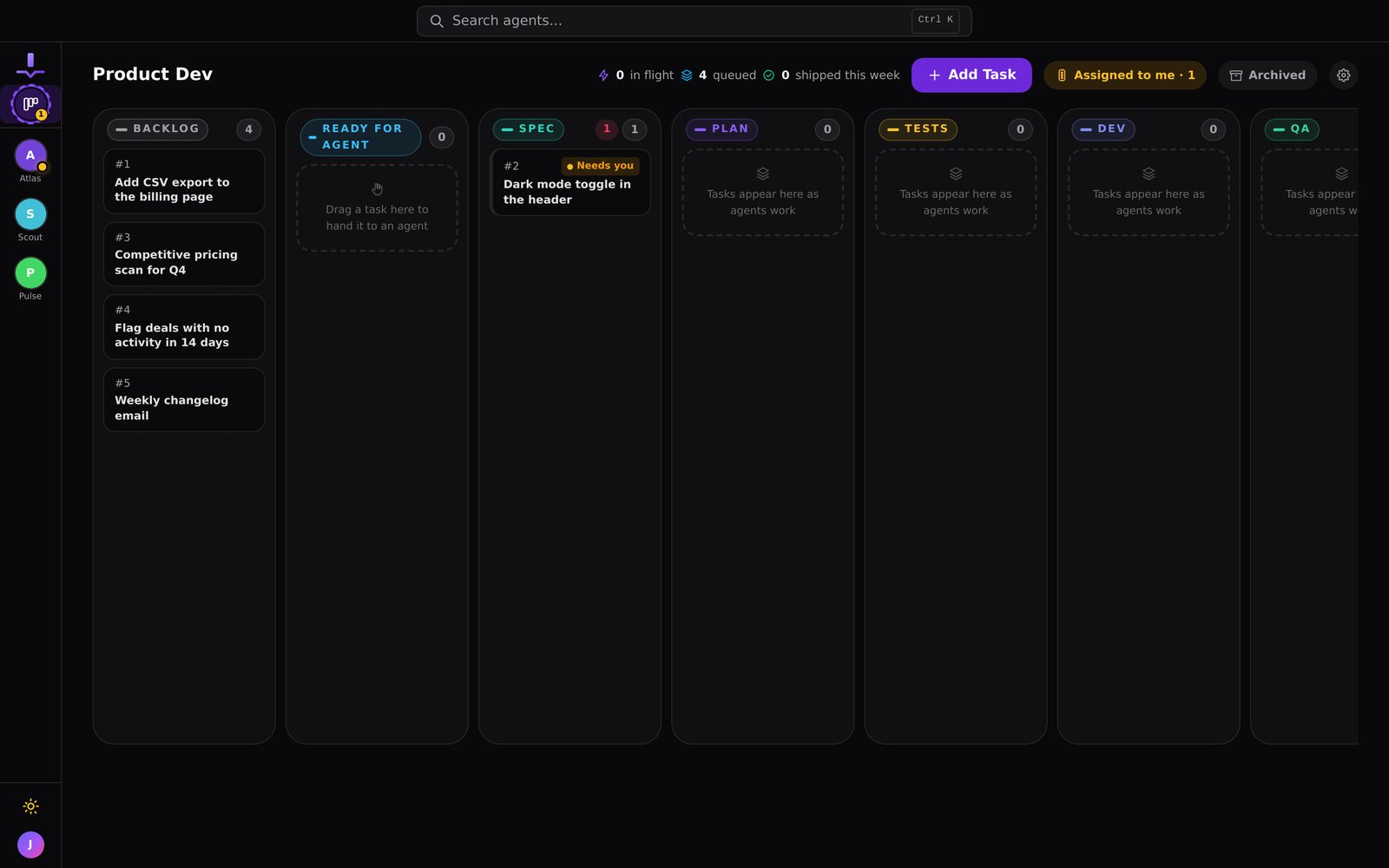
Workflows with stages (spec, plan, build, QA, code review, product review) and approval gates that queue decisions for you.
Claude Code
A coordinator decides what becomes a thread; you can ask it to propose threads and wait for your go-ahead.
Models
JackHamr
Any model: ours, your own OpenAI or Anthropic keys, or your Claude Code or Codex subscription as the brain.
Claude Code
Claude models. Cloud sessions require an Anthropic account, not Bedrock or Vertex.
Beyond code
JackHamr
Agents for research, marketing, and ops too, with 1,500+ connected apps (Gmail, Notion, HubSpot, Linear) granted per agent.
Claude Code
Focused on code. MCP connectors and Slack are supported.
Repositories
JackHamr
GitHub, with SSH key and token fallbacks when an org blocks OAuth apps.
Claude Code
Cloud work and pull requests need github.com; other hosts can be uploaded but results cannot be pushed back.
Pricing
JackHamr
Pay only while agents run. Free to start, no seats.
Claude Code
Your Claude plan. Parallel sessions and Projects draw on its usage limits, and Projects use them faster.
Where JackHamr is stronger
The difference is not whether agents can run in parallel anymore. It is what surrounds them. In JackHamr, an agent is a teammate with a name, its own machine, a memory that grows every session, and a place on a board your whole team can see.
- Machines that stay. Each agent keeps its files, tools, databases, and running apps between tasks, and you can open its VS Code, terminal, or browser any time.
- Built for teams today. Share agents, boards, and workflows across your organization, with roles and an agent directory.
- A process, not just a pile of threads. Workflows run spec, plan, build, QA, and review as separate agents, and approval gates queue the calls that need you.
- Any model. Use ours, bring your own keys, or plug in your Claude Code or Codex subscription.
- More than code. Agents for research, sales, and ops, with 1,500+ apps granted one agent at a time.
Where Claude Code is stronger
Being fair about this matters, so here is when we would point you to Claude Code on its own.
- You are one developer who lives in the terminal and wants the tightest possible loop with Claude models.
- You like moving a session between your laptop and the cloud with teleport.
- Your work is on github.com, you already pay for Max, and you rarely hit its usage limits.
- You want Anthropic first-party tooling like Ultrareview and PR auto-fix inside the same product.
Or use both
This is the setup a lot of teams land on. Connect your Claude Code or Codex subscription in JackHamr settings, and it becomes the brain of any agent, sub-agent, or board task. The platform hosts the runtime, so there is no daemon to keep running. You keep the model you like and get the machines, boards, approvals, and team sharing around it.
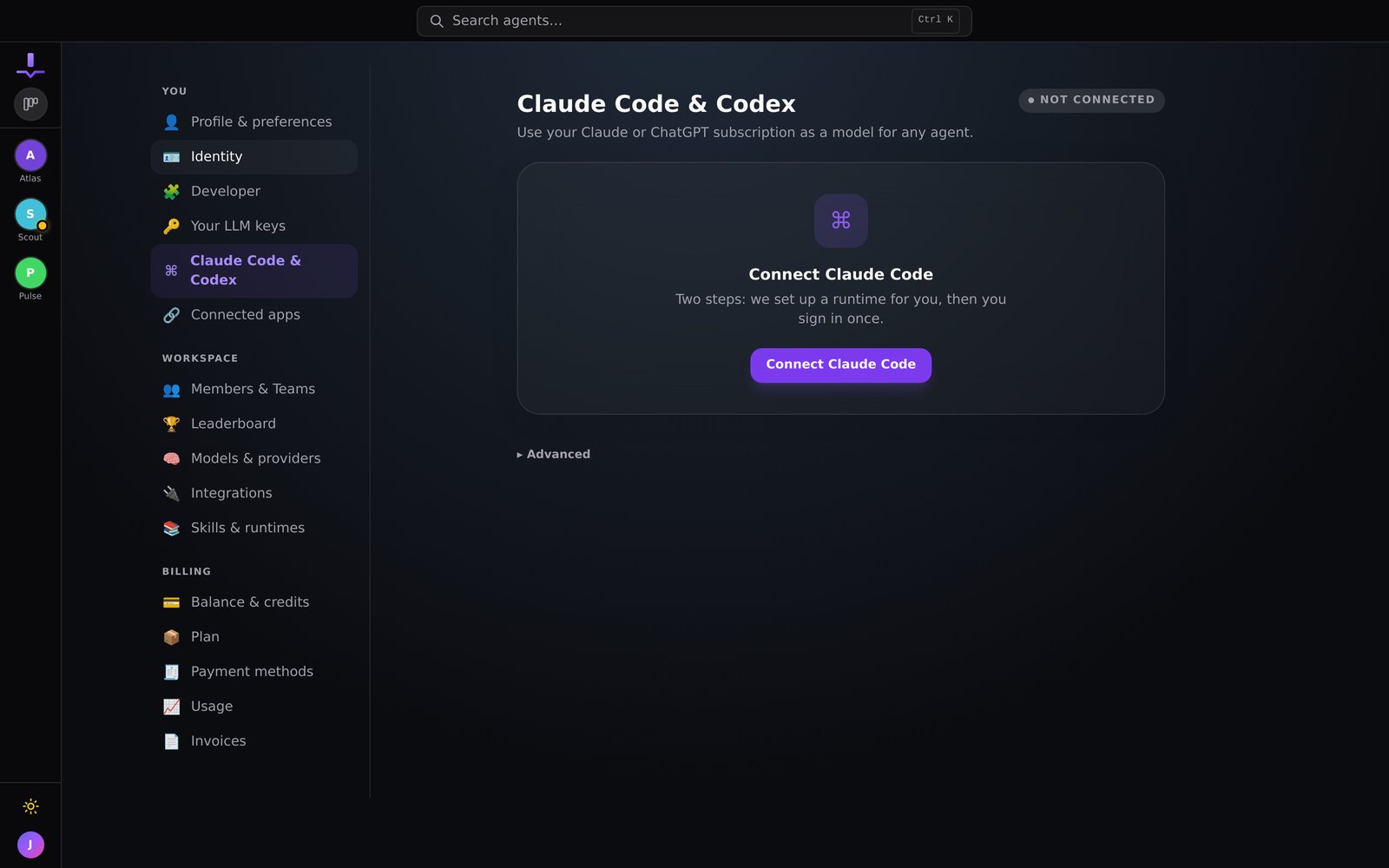
You can read how that works in Claude Code and Codex, no daemon, or see a whole board run in Boards: a Kanban board your agents run.
Want Claude Code working around the clock? We compared the three real ways to do it in How to run Claude Code 24/7.
Questions people ask
Is JackHamr a Claude Code alternative?
It can be, but it does not have to be. JackHamr runs a team of agents on their own cloud machines with boards, approval gates, and team sharing. You can use your Claude Code subscription as the brain of those agents, so many teams use both.
Can Claude Code run agents in parallel now?
Yes. As of September 2026, Claude Code runs parallel cloud sessions, and its Projects feature, in public beta on Pro and Max plans, coordinates several threads toward one goal.
Can I use my Claude Code subscription inside JackHamr?
Yes. Connect it in Settings under Claude Code and Codex. The platform hosts the runtime for you, so there is nothing to install, and any agent, sub-agent, or board task can use it.
When is Claude Code the better choice?
If you are one developer who lives in the terminal, works on GitHub repositories, uses Claude models, and stays within your plan limits, Claude Code alone is simple and well integrated.
Can I hand work to JackHamr agents from Claude or Claude Code?
Yes. JackHamr has an MCP server, so Claude, Claude Code and other MCP apps can send tasks to your JackHamr agents, answer their questions, and get the results back. Setup takes one command in Claude Code, or a custom connector in Claude. See jackhamr.ai/docs/mcp.
Bring your Claude Code. Get a fleet.
Free to start. Nothing to install. Running in two minutes.