Guide
How to run Claude Code 24/7
Claude Code is at its best when it keeps working after you close the laptop. There are three real ways to get there: your own always-on server, Anthropic's Claude Code Routines, or an autonomous agent on JackHamr that uses your Claude Code subscription as its brain. Here is what each one is good at, and the catches.
Updated September 30, 2026. Routines details from Anthropic's Claude Code documentation.
At a glance
What it is
Your own server
Claude Code running in a tmux session on a server or spare machine that never sleeps.
Claude Code Routines
Anthropic's scheduled or triggered cloud runs of Claude Code (research preview).
JackHamr agent
An autonomous agent on a hosted cloud machine, with your Claude Code subscription as its brain.
How it keeps going
Your own server
The session stays open; you check in over SSH or remote control.
Claude Code Routines
Each schedule, API call, or GitHub event starts a fresh session from your repo. Hourly at most on a schedule.
JackHamr agent
You give it a job and goals. It checks in on its own schedule (every 15 minutes to every 4 hours) and picks the next task.
Memory between runs
Your own server
Whatever you keep on the machine.
Claude Code Routines
Starts from the repo each run; your prompt carries the context.
JackHamr agent
A persistent machine plus a plan and a memory wiki that carry over between check-ins.
Approvals
Your own server
Up to how you configure permissions.
Claude Code Routines
Runs without stopping for approval (apart from some publishing actions).
JackHamr agent
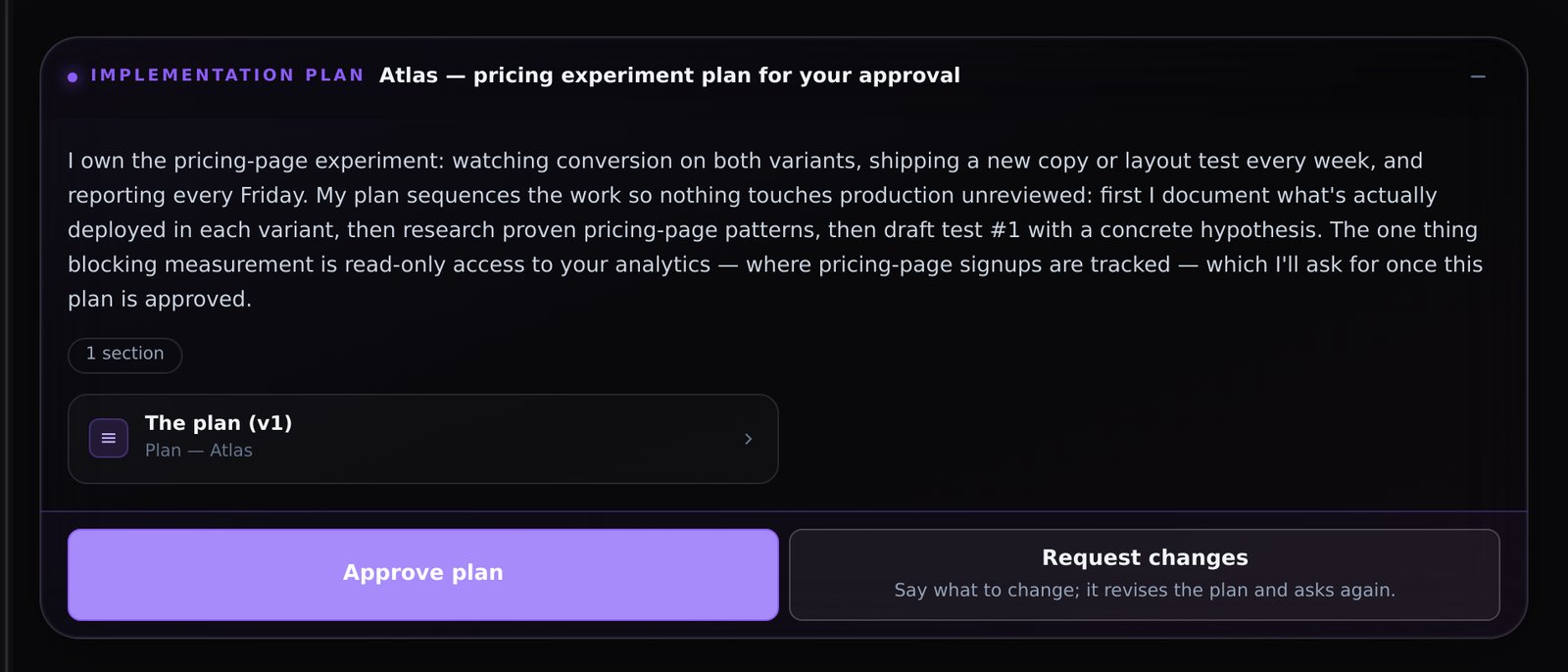
Plan sign-off first, then your own plain-English rules; it asks with a decision card and pauses until you answer.
Setup and upkeep
Your own server
You run the server, security, updates, and restarts.
Claude Code Routines
Nothing to host. Configure the prompt, repos, environment, and triggers.
JackHamr agent
Nothing to host. Sign in with your subscription in Settings; the runtime host is free.
Teams
Your own server
Share the box if you like.
Claude Code Routines
Routines belong to one person's account and aren't shared with teammates.
JackHamr agent
Shared agents, boards, and workflows across your organization.
Cost
Your own server
The server, plus your Claude plan's usage.
Claude Code Routines
Included in Pro, Max, Team, and Enterprise; runs draw on your plan's usage limits.
JackHamr agent
Your Claude plan's usage, plus the agent's machine at cost while it runs. Free to start.
Option 1: your own always-on server
Rent a small server (or use a spare machine), install Claude Code, start it inside tmux so the session survives when you disconnect, and reach it over SSH or a remote-control setup from your phone.
- Good for: one developer who wants full control of the box and is happy to maintain it.
- The catch: you own the server, its security, updates, and restarts. A single terminal session is still one agent doing one thing, and it waits for you between tasks unless you script a loop.
Option 2: Claude Code Routines
Routines are Anthropic's way to run Claude Code unattended. You save a prompt, pick repositories and an environment, and attach triggers: a schedule (hourly at most), an API call, or a GitHub event. Each run is a full cloud session, so nothing depends on your laptop.
- Good for: repeatable, well-defined jobs with a clear trigger, like a nightly backlog groom or reviewing every new pull request.
- The catch: every run starts fresh from your repo, runs without stopping for approval, and uses your plan's usage limits. Routines belong to one person's account and are still in research preview.
Option 3: an autonomous agent on JackHamr
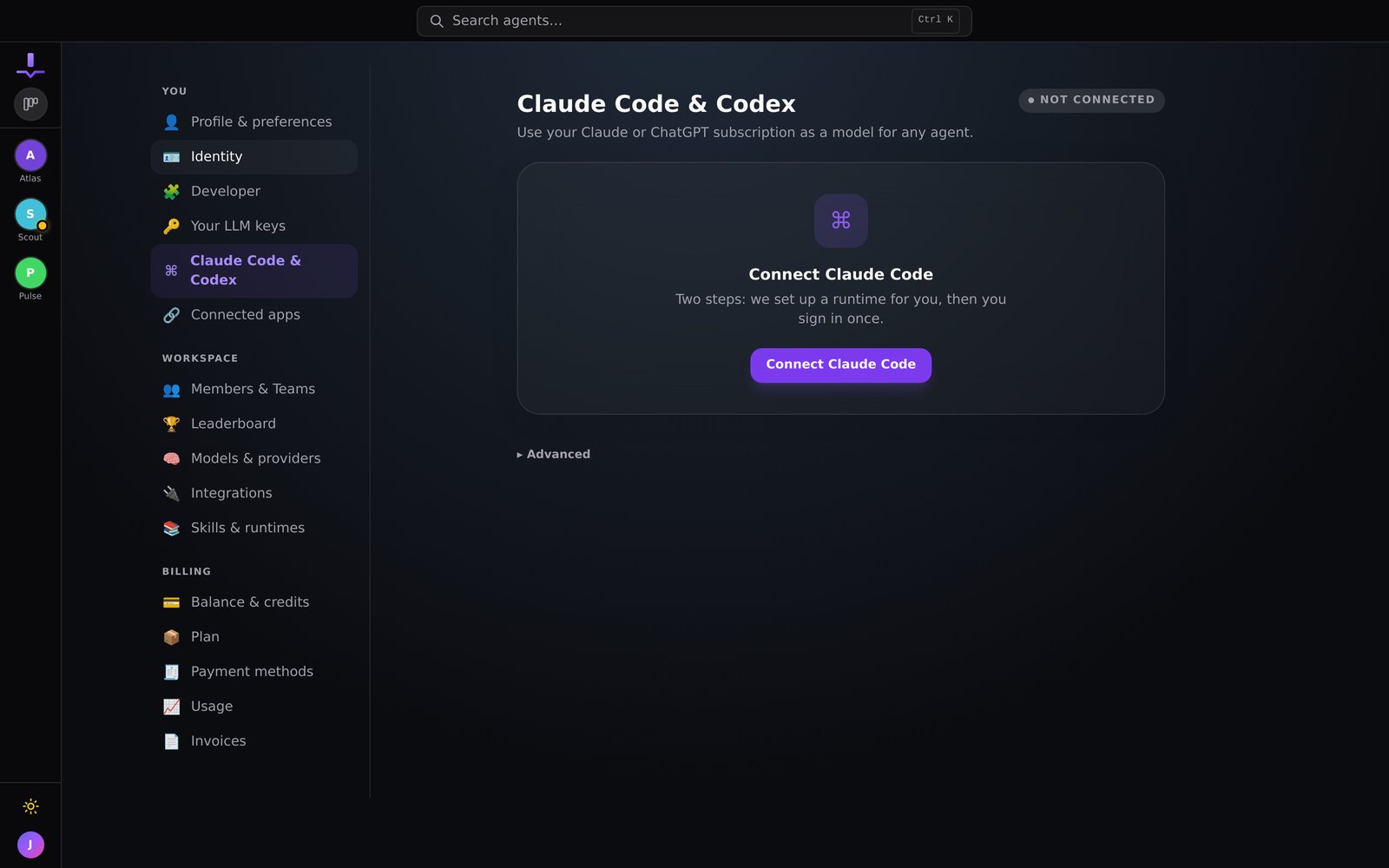
Connect your Claude Code (or Codex) subscription in Settings and it becomes the brain of a JackHamr agent, on a runtime the platform hosts for free. Then turn on autonomy: give the agent a job and goals in plain English. It drafts a plan you sign off, checks in on its own schedule, picks the most valuable next step, and asks before anything your rules say needs you.
- Good for: ongoing work with a goal rather than a single trigger, like keeping a backlog moving, growing traffic, or triaging issues, where context should carry over from one check-in to the next.
- Also: each agent keeps its own machine (files, tools, running apps) between check-ins, you can run several in parallel, and teammates can share them.
- The catch: the agent's machine is billed at cost while it runs, on top of your Claude plan's usage. Code work is GitHub only today.
Which one should you pick?
- You want total control and enjoy running servers: your own box with tmux.
- You have a clear, repeatable job that fires on a schedule or an event: Claude Code Routines.
- You want an agent that owns an outcome, keeps its context, and checks with you before anything important: a JackHamr autonomous agent.
Whichever you choose, pace it. Around-the-clock work draws on your Claude plan either way, and a few well-chosen tasks per check-in beat a loop that runs flat out. More on how the autonomy loop works in Autonomous agents: give it a job, not a prompt, and how JackHamr compares with Claude Code on its own in JackHamr vs Claude Code.
Questions people ask
Can I run Claude Code 24/7?
Yes. The three common ways are keeping it open in tmux on a server that never sleeps, scheduling Claude Code Routines in Anthropic's cloud, or running it as the brain of an autonomous agent on a hosted platform like JackHamr. They differ in how much you maintain and how much context carries over between runs.
Does running Claude Code 24/7 use up my Max subscription?
Yes, in every setup the model work draws on your Claude plan's usage limits, including Anthropic's own Routines. Around-the-clock work is about pacing: fewer, better-chosen tasks per check-in beat a loop that runs flat out.
Can Claude Code run in the cloud instead of on my laptop?
Yes. Anthropic offers cloud sessions and Routines, and JackHamr runs your Claude Code subscription on a runtime it hosts for you, so nothing depends on your laptop staying awake.
What is the difference between Routines and a JackHamr autonomous agent?
A routine runs a saved prompt on a trigger, from a fresh session each time, without stopping for approval. A JackHamr agent owns a job with goals: it keeps a plan and a machine between check-ins, decides what to do next, and asks before anything your rules say needs you.
Keep Claude Code working while you sleep.
Free to start. Nothing to install. Running in two minutes.