Compare
JackHamr vs Emergent
Emergent turns a description into a working full-stack app: web or mobile, with hosting included, priced through credit packs inside subscription plans. JackHamr works a different side of the street: a team of AI agents that each keep their own machine and run a staged process from spec to deploy, with you approving at the gates. Here is an honest look at where each one is stronger.
Updated October 23, 2026. Emergent details from emergent.sh's published pricing and documentation.
At a glance
What it is
JackHamr
An AI agent orchestration platform. A team of named agents runs the full delivery pipeline on machines the platform hosts.
Emergent
An AI-powered app builder at emergent.sh that turns descriptions into full-stack web and mobile apps, with credit-metered usage inside subscription plans.
Where the work runs
JackHamr
A persistent cloud machine per agent: up to 16 cores, 64 GB RAM, real filesystem, Docker. Files, tools, and running apps survive between tasks.
Emergent
On your machine. Devin Local runs inside the editor against your local filesystem and terminal.
How much it does on its own
JackHamr
Whole features: spec, plan, build, QA, code review, and deploy run as staged agent work with approval gates where you decide.
Emergent
Suggestions and in-editor agent runs while you drive. Strong autocomplete and refactors; you review and ship.
Many agents at once
JackHamr
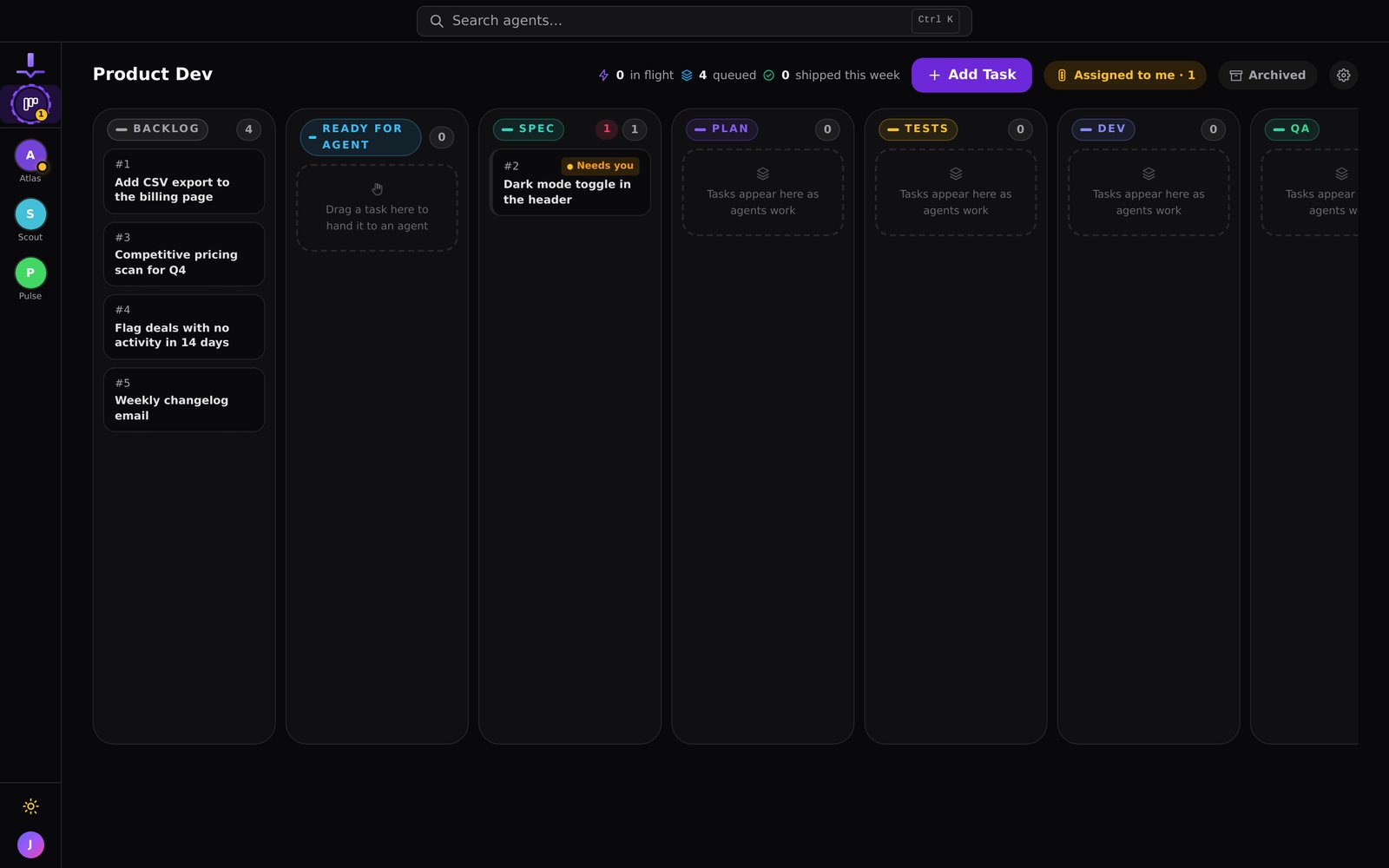
Boards fan tasks out to as many agents or clones as you like, in queue, clone, or distribute mode.
Emergent
One editor, one developer. Parallel work means opening more windows or using Devin Cloud sessions.
Pricing model
JackHamr
Pay only while agents run: infrastructure at cost with an itemized bill, tokens at provider rates. Free to start, no seats.
Emergent
Emergent runs on credit packs inside $20 and $200/month plans, with usage beyond the pack billed per credit. Credit burn is the top complaint in its reviews.
Process and approvals
JackHamr
Staged workflows with approval gates that queue decisions for you: nothing sensitive runs before you say so.
Emergent
You watch the build happen in a preview; there is no spec-approval gate before work starts.
Models
JackHamr
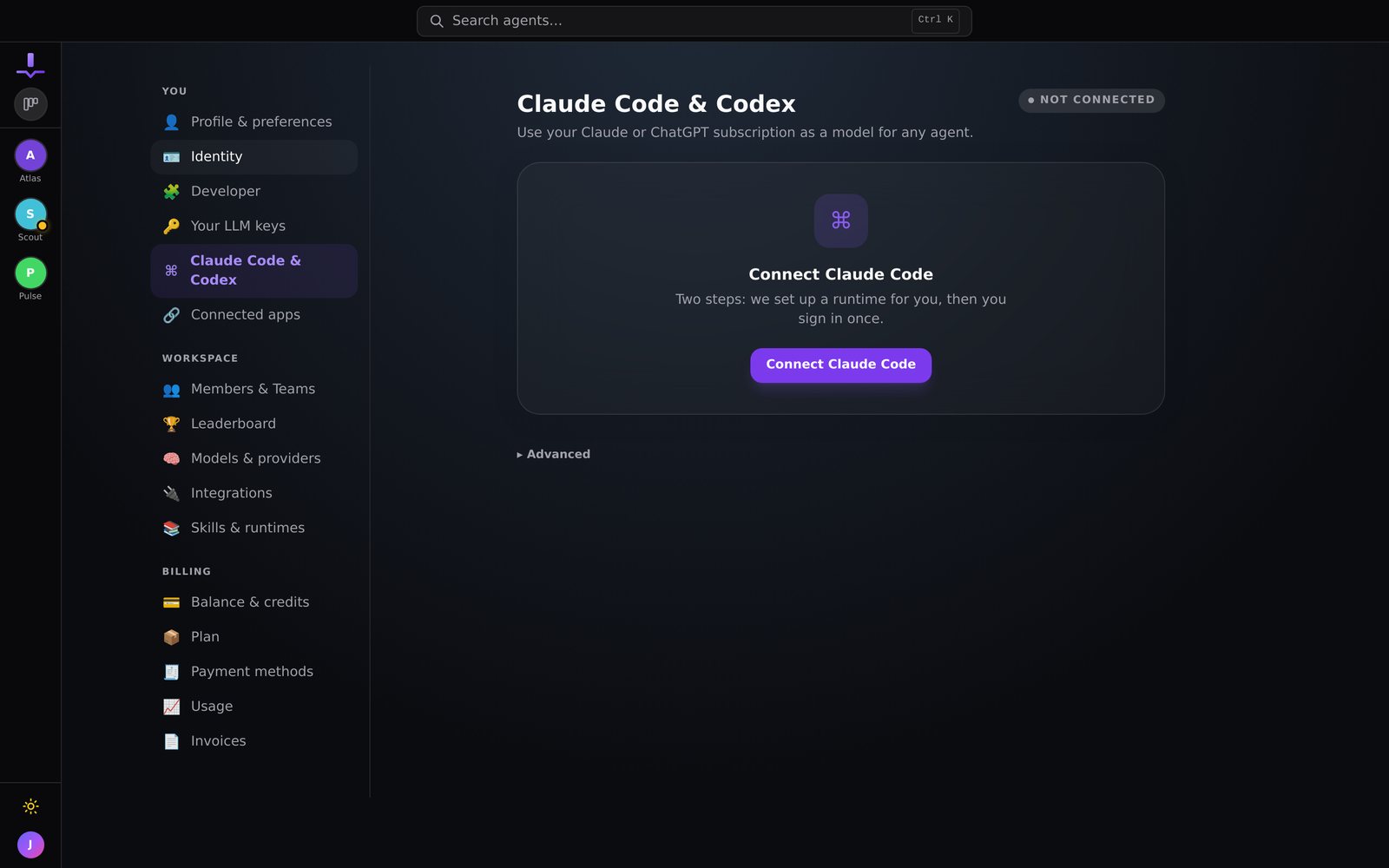
Any model: ours, your own OpenAI or Anthropic keys, or your Claude Code or Codex subscription as the brain.
Emergent
Frontier models metered through credits; you do not bring your own provider keys.
Beyond code
JackHamr
Agents for research, marketing, and ops too, each with its own memory that grows every session.
Emergent
An app builder: it generates full-stack apps, but it is not a team that keeps working between tasks.
Where JackHamr is stronger
Emergent keeps you describing apps and watching builds. JackHamr hands the driving to a team: agents with names, machines that stay, a process that checks their work, and a board your whole company can see.
- Machines that stay. Each agent keeps its files, tools, databases, and running apps between tasks, and you can open its VS Code, terminal, or browser any time.
- A process, not just a session. Spec, plan, build, QA, and review run as separate agents, and approval gates queue the calls that need you.
- Pricing you can see. Infrastructure at cost on an itemized bill and tokens at provider rates. No quota to ration, and no seats.
- Any model. Use ours, bring your own keys, or plug in your Claude Code or Codex subscription.
- More than code. Agents for research, sales, and ops, with 1,500+ apps granted one agent at a time.
Where Emergent is stronger
Being fair about this matters, so here is when we would point you to Emergent on its own.
- You spend your day in an editor and want best-in-class autocomplete and in-editor agent help while you code.
- Your code is on GitLab or Bitbucket, which JackHamr does not support today.
- You want the editor and the autonomous agent (Devin Cloud) from one vendor on one bill.
- You need enterprise controls like VPC deployment and FedRAMP-grade compliance.
Or use both
They are not competing for the same hour. Keep Emergent for app generation, and give JackHamr the work that should run end to end without you: a feature that needs a spec you approve, a long-running environment, or work outside the repo like research and ops.
You can read how agents run the pipeline in The guided build workflow, and how parallel work is dispatched in Boards: a Kanban board your agents run.
Questions people ask
Is Emergent still available?
Yes, at emergent.sh. Its Standard plan is $20/month (or $17 annually) and Pro is $200, with credit packs metering usage. Check their pricing page for current numbers.
Is JackHamr an Emergent alternative?
It is a different shape of tool. Emergent is a credit-metered app builder that generates full-stack apps from descriptions. JackHamr is an AI agent team that runs the whole delivery pipeline with approval gates on its own cloud machines. If you want hands-off feature delivery you can steer, that is the comparison that matters.
Why do Emergent reviews mention credit burn?
Because credit burn is the most common complaint in Emergent's reviews: small tasks consuming large credit amounts. JackHamr's per-run pricing with an itemized bill exists precisely to make cost predictable. Whether that matters depends on your workload.
When is Emergent the better pick?
If you are a non-developer who wants a working app from a description and accepts that costs scale with credits, Emergent is built for exactly that. It is not built to run unattended pipelines, host running apps between tasks, or coordinate a team of agents.
Assign the ticket. Or hire the team.
Free to start. Nothing to install. Running in two minutes.