Compare
JackHamr vs OpenAI Codex
Codex is OpenAI's coding agent, and if you pay for ChatGPT you already have it. JackHamr is a different shape: a team of agents that each keep their own machine, run a staged process with approval gates, work on jobs on their own, and can use any model, including your Codex subscription. Here is an honest look at where each one is stronger.
Updated October 1, 2026. Codex details from OpenAI's published pricing and documentation.
At a glance
What it is
JackHamr
An AI agent orchestration platform. A team of named agents runs the full delivery pipeline on machines the platform hosts.
Codex
OpenAI's coding agent: a desktop app, CLI, IDE extension, and Codex Cloud, included with ChatGPT plans.
Where the work runs
JackHamr
A persistent cloud machine per agent: up to 16 cores, 64 GB RAM, real filesystem, Docker. You can open its VS Code, terminal, or browser any time.
Codex
Locally on your computer, or in Codex Cloud, where each task gets its own workspace built from a saved environment you publish.
Many agents at once
JackHamr
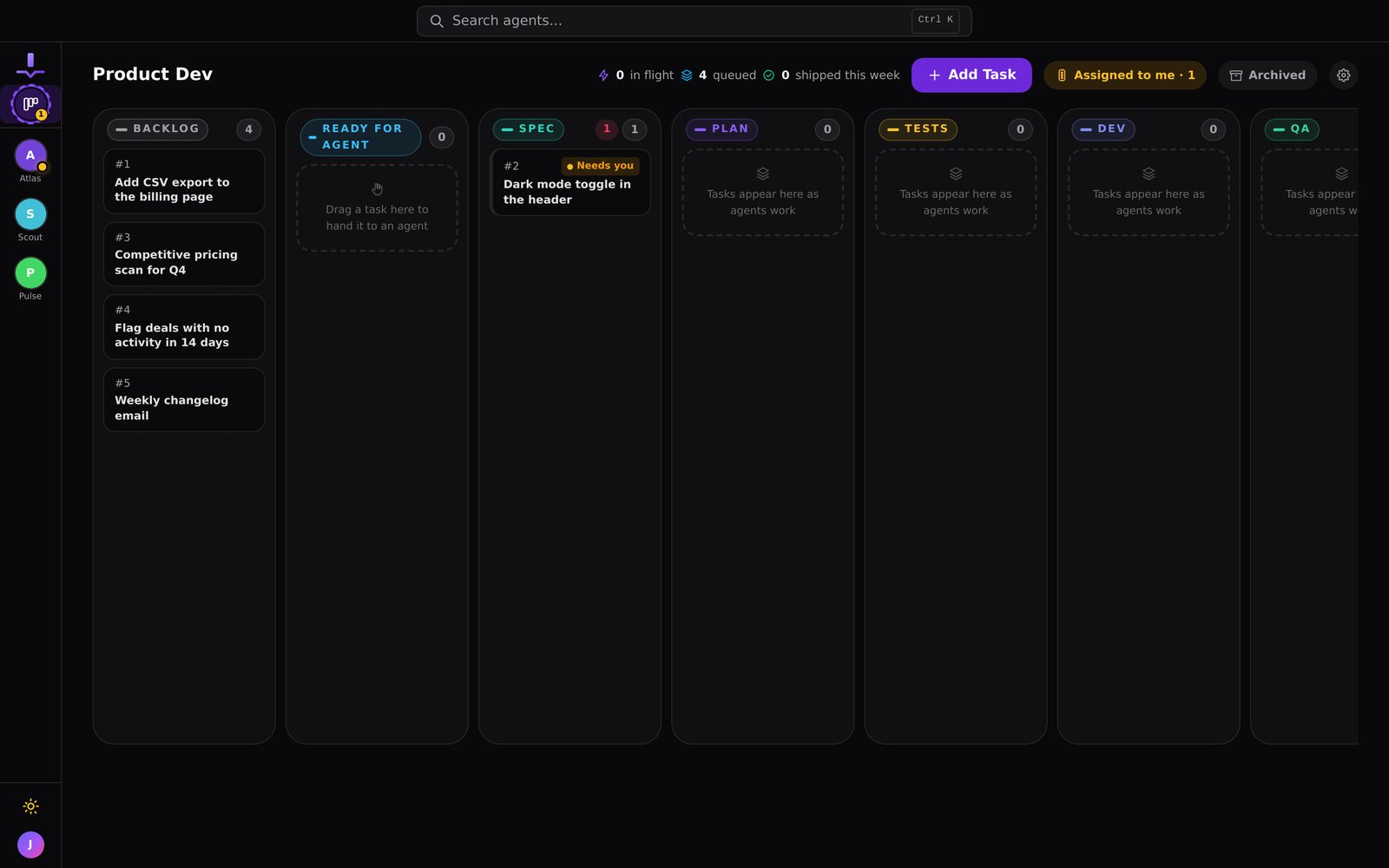
Boards fan tasks out to as many agents or clones as you like, in queue, clone, or distribute mode.
Codex
Parallel chats through Git worktrees locally, parallel cloud tasks, and subagents inside a task.
Pricing model
JackHamr
Pay only while agents run: infrastructure at cost with an itemized bill, tokens at provider rates. Free to start, no seats.
Codex
Included in ChatGPT plans: Free, Go $8, Plus $20, Pro $100 to $500 a month, Business $20 to $25 per user. Usage limits are shared with ChatGPT Work, extendable with credits.
Process and approvals
JackHamr
Workflows with stages (spec, plan, build, QA, code review, product review) and approval gates that queue decisions for you.
Codex
You review diffs and test results per task, request follow-ups, then commit or open a pull request. Automatic code review on GitHub.
Models
JackHamr
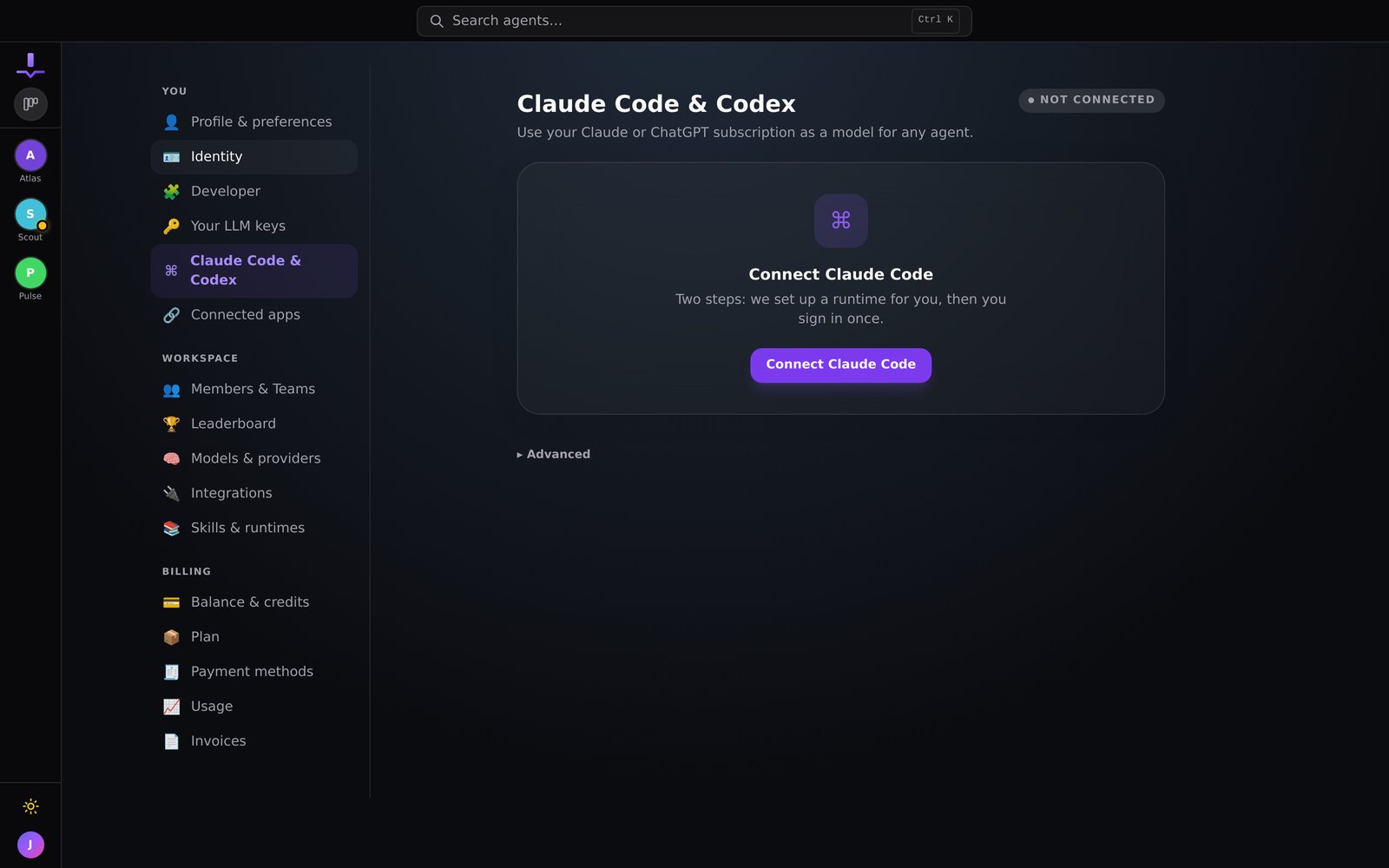
Any model: ours, your own OpenAI or Anthropic keys, or your Claude Code or Codex subscription as the brain.
Codex
OpenAI models only (GPT-6 Sol and GPT-6 Luna on paid plans).
Working on its own
JackHamr
Autonomous agents: give one a job and goals, it drafts a plan you sign off, then checks in on a schedule and asks before anything you flagged.
Codex
Scheduled tasks and app-event triggers, plus Dots, OpenAI's always-on assistants, as a separate product.
Repositories
JackHamr
GitHub, with SSH key and token fallbacks when an org blocks OAuth apps.
Codex
GitHub for Codex Cloud, plus code review on GitLab merge requests.
Beyond code
JackHamr
Agents for research, marketing, and ops too, each with its own memory that grows every session.
Codex
Non-code work lives in ChatGPT Work, which shares the same usage.
Where JackHamr is stronger
Codex is a strong agent you hand tasks to. JackHamr is a team: agents with names, machines that stay, a process that checks their work, and a board your whole company can see.
- Machines that stay. Each agent keeps its files, tools, databases, and running apps between tasks, not just a saved setup that each new task starts from.
- A process, not just a task. Spec, plan, build, QA, and review run as separate agents, and approval gates queue the calls that need you.
- Any model. Use ours, bring OpenAI or Anthropic keys, or plug in your Claude Code or Codex subscription. Mix models across agents.
- Pricing you can see. Infrastructure at cost on an itemized bill and tokens at provider rates. No usage window to ration.
- Agents that own a job. Give one a goal and rules in plain English; it plans, checks in on a schedule, and asks before anything you flagged.
Where Codex is stronger
Being fair about this matters, so here is when we would point you to Codex on its own.
- You already pay for ChatGPT and want a coding agent at no extra cost.
- You want an agent on your own laptop, in your editor and terminal, as much as in the cloud.
- You want automatic pull request reviews on GitHub, or reviews on GitLab merge requests.
- You only use OpenAI models and want one vendor and one bill for chat, coding, and assistants.
Or use both
This is the easiest pairing on the list. JackHamr can run your Codex subscription as the brain of any agent, fully managed: Codex does the thinking, and JackHamr adds the machine that stays, the board, the approval gates, and the schedule. Keep Codex on your laptop for quick work, and send the features that need a spec, QA, and review to JackHamr.
You can read how agents run the pipeline in The guided build workflow, and how parallel work is dispatched in Boards: a Kanban board your agents run.
Questions people ask
Is JackHamr an OpenAI Codex alternative?
Yes, and a complement. Both run coding agents in the cloud. JackHamr adds persistent machines per agent, staged workflows with approval gates, boards for parallel work, autonomous agents that own a job, and any model, with pay-while-running pricing instead of plan usage limits.
Can I use my Codex subscription in JackHamr?
Yes. In Settings, sign in with your ChatGPT account and Codex becomes the brain of any agent you choose. The platform hosts the runtime, so there is nothing to keep running on your own machine.
How is Codex Cloud different from a JackHamr agent machine?
In Codex Cloud you publish an environment, and each new task starts from that prepared setup in its own workspace. A JackHamr agent keeps one machine across all its tasks, with running apps, Docker, and a browser you can take over.
When is Codex the better choice?
If you already pay for ChatGPT, mostly work on your own laptop, want automatic GitHub code reviews, or only use OpenAI models, Codex fits with no new account. It is not built around staged approval workflows, boards, or mixing models across agents.
Can I use JackHamr from ChatGPT or Codex?
Yes. JackHamr has an MCP server, so ChatGPT and the Codex CLI can send tasks to your JackHamr agents, answer their questions, and get the results back. See jackhamr.ai/docs/mcp for setup.