
Agents that learn: the memory wiki
Every agent learns on its own. Each session ends with notes, a nightly librarian merges them into a wiki, and the wiki shapes every prompt after that. Month three looks nothing like day one.
An agent that forgets everything between sessions is a contractor you re-brief every morning. It does fine work. It never gets better at your work. This release changes that.
It learns without being asked
Every agent now keeps a wiki, and it fills it in itself. At the end of every conversation the agent distills what it learned: how your codebase is laid out, which conventions you follow, which command finally worked after three failed attempts, what you pushed back on. Those notes land in an inbox. Overnight a librarian pass merges them into proper pages, flags anything that contradicts what was already there, and rebuilds an index.
That index is injected into the agent's prompts. The next morning it walks into every conversation already knowing what it figured out the day before. Nobody told it to remember. It just does.
What ends up in there
- The shape of your projects: where things live, how they are built, how they are deployed
- Your conventions, learned by watching what you accept and what you change
- Mistakes it made and how it fixed them, so the same one does not happen twice
- Facts about clients, systems, and people that came up in the course of the work
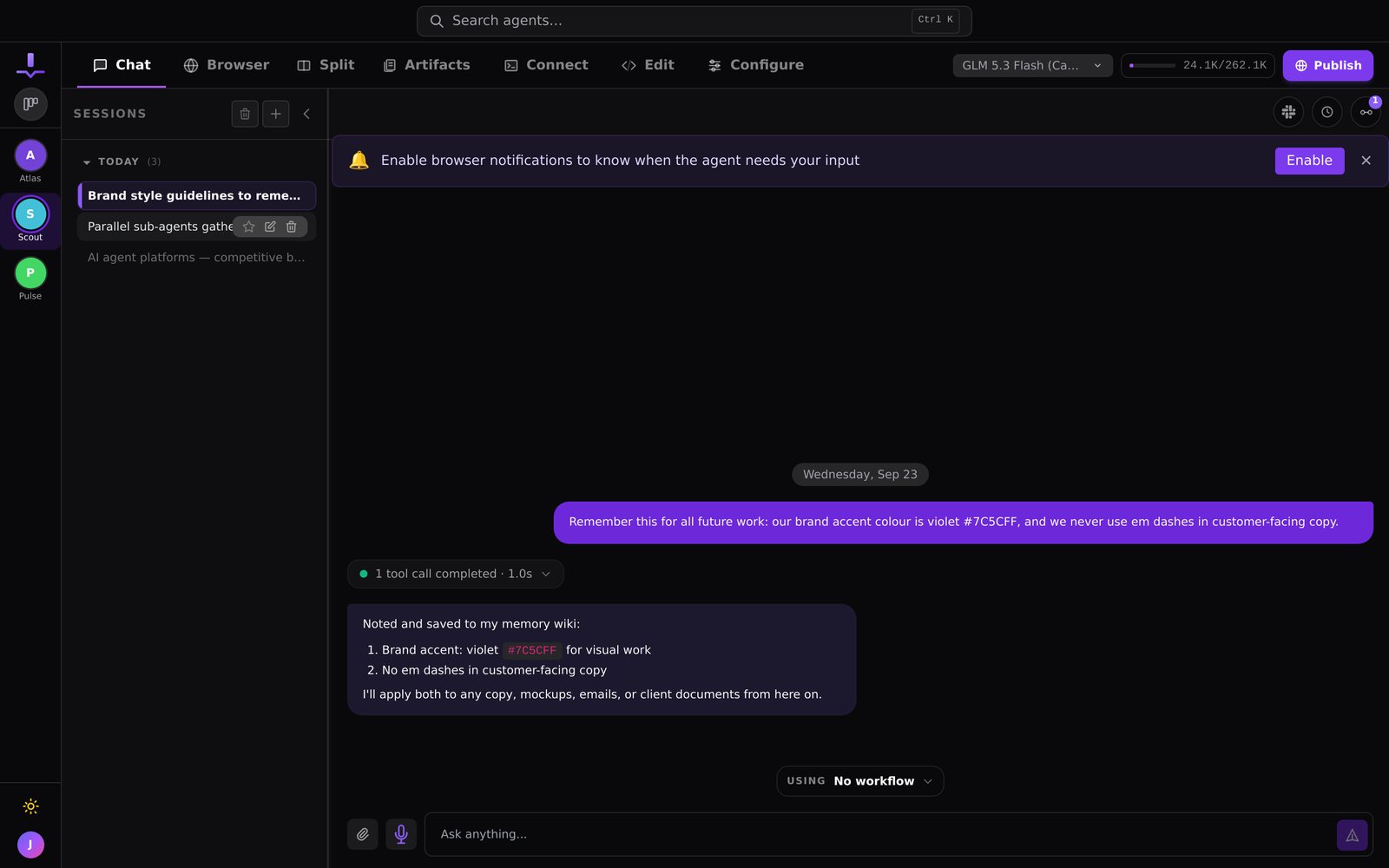
- Anything you corrected, which becomes a durable rule rather than a preference it forgets by Thursday
Memory search reads the wiki first, so when an agent wonders how you like deployments handled, the answer is on a page, not buried in a transcript from March.
You can teach it directly too
Automatic learning is the default. On top of that you can say "remember this" and it goes straight into the wiki, or "learn from this document" and the agent reads, synthesises, and files it. Correct it once, "no em dashes in customer-facing copy", and that is a rule from then on. But most of what an agent knows after a month, it picked up on its own.
Clones inherit
The part that matters for fleets: clones read the parent's wiki. When a board fans a task out to ten clones, all ten know what the parent learned. What one agent figured out, the whole fleet knows.
Where the idea came from
The design follows Andrej Karpathy's LLM wiki pattern: let the model maintain structured knowledge over time rather than stuffing everything into context. We adapted it for a multi-agent world where knowledge has to flow between agents, not just persist within one.
Never repeats a mistake you have corrected. Learns your codebase and your conventions. Compounds, every week.
Brief it once. It stays briefed.
More releases
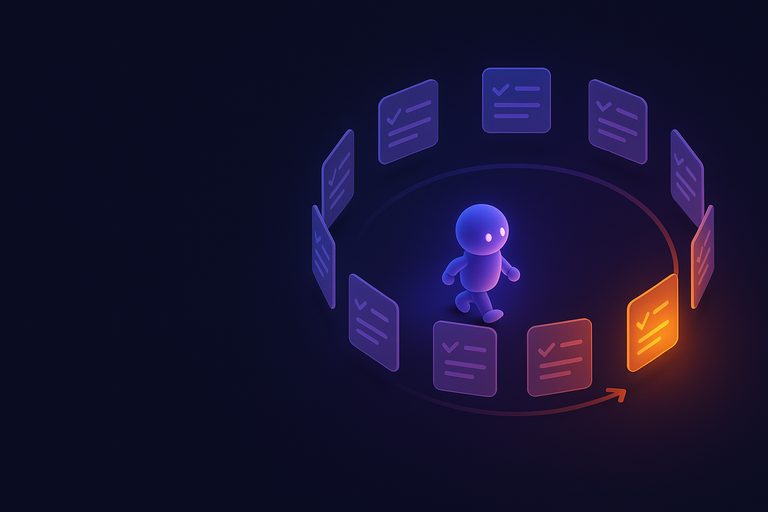
Autonomous agents: give it a job, not a prompt
Proactive agents that work toward your goals on their own. Give one a job, sign off on its plan, and it checks in, works through its backlog, asks for approval where you want it, and gets better every week.
2 min read
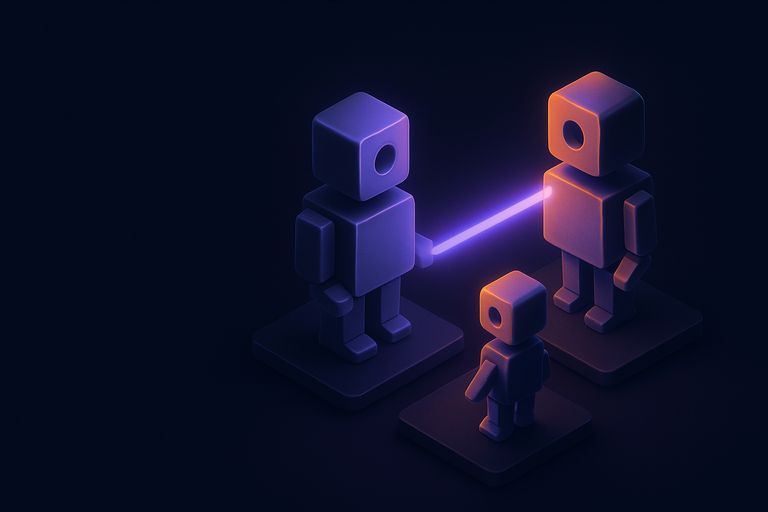
Agents can talk to other agents
Approve trust between two agents and they can message each other, or mention a trusted agent into your own chat. A fleet that coordinates, with guardrails.
2 min read
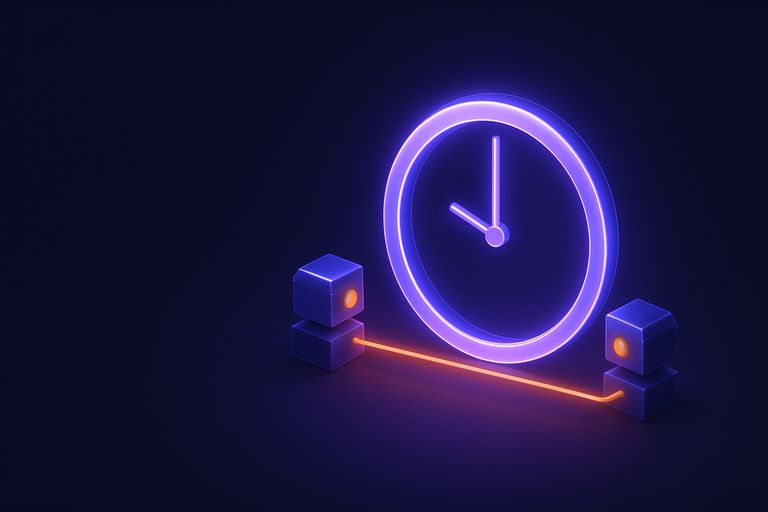
Agents that work while you are not in the room
Schedules so an agent starts without you, and sharing so it answers to the whole team. Recurring work, no reminders, everyone on the same conversation.
2 min read